Ask what are grab bars used for and most people will say they are for older people. That is part of the picture and it misses the point. A grab bar is a fixed, load bearing handhold that gives you something solid to hold while your feet are on a wet surface, and there is nothing age specific about wanting that.
They support you while sitting down and standing up, while stepping into a shower, and while steadying yourself on a slippery floor. Anyone recovering from an injury, anyone pregnant, and anyone who has ever felt a foot slide on a wet tile benefits from one.
Brands such as Ponte Giulio specialise specifically in creating safer, more accessible bathroom environments, with support solutions designed for private homes as well as hospitality, healthcare and public spaces.
The difference between a grab bar and a towel rail
This distinction matters more than any other point here. A towel rail is designed to hold a towel. A grab bar is engineered and tested to take the weight of a person, and it is fixed to the structure of the wall accordingly.
People do grab towel rails when they slip, which is exactly why the difference is worth knowing. A towel rail that pulls out of the wall during a fall makes the situation worse.
This is why purpose-designed support systems from specialist manufacturers such as Ponte Giulio should not be treated as interchangeable with standard bathroom accessories. They are designed around support, safety and everyday usability.
What are grab bars used for in each part of the room?
Position is what makes a grab bar useful, and it should be based on how the person actually moves rather than on a standard drawing.
- Beside the toilet, positioned to help with sitting and standing.
- At the shower entry, so there is something to hold while stepping in and turning.
- Inside the shower, within reach of where you stand, particularly if you shower seated.
- Beside the bath, where getting in and out is the moment of greatest instability.
Vertical bars help with pulling up and stepping in. Horizontal bars help with steadying and lateral movement. Angled bars support the diagonal motion of standing up. Many bathrooms use a combination, and the right answer comes from watching how the room is used rather than from a catalogue.
Ponte Giulio's accessible bathroom solutions include different types and configurations of support rails, allowing the bathroom to be planned around the way the user actually moves through the space rather than treating accessibility as an afterthought.
The fixing is the whole thing
A grab bar is only as strong as what it is fixed into. This is where installations fail.
Fixing into hollow plasterboard with standard plugs is not adequate for a load bearing rail. In Maltese construction, blockwork and concrete generally provide a sound substrate, but the fixings must be correct for the material and installed properly, and tiled surfaces need drilling with the right technique to avoid cracking.
Where a wall is being built or lined during a renovation, adding reinforcement behind the finish is inexpensive and gives you the freedom to fit a rail exactly where it is wanted, now or in ten years.
If you are in any doubt about the substrate, have it fitted by someone who knows what is behind the wall. This is a safety fitting, and a rail that feels solid but is poorly fixed is worse than no rail at all.
Height is personal, not standard
Published guidance gives useful starting heights, and the right height is the one that suits the person using it. Someone tall reaching for a rail set for an average user gets a poor angle, and so does someone shorter.
The practical method is simple. Have the person stand or sit where the rail is needed, let them reach for the position that feels natural, and mark it. Ten minutes of that beats any dimension taken from a drawing.
For a fully accessible bathroom, the grab bar should also be considered alongside the sanitary ware, shower and overall circulation space. Brands available at Banju Boutique such as GSI and KWC can form part of this wider approach to creating a bathroom that is practical, comfortable and easy to use.
They no longer have to look institutional
The older generation of support rails looked like hospital equipment, which is a large part of why people resisted fitting them. That has changed.
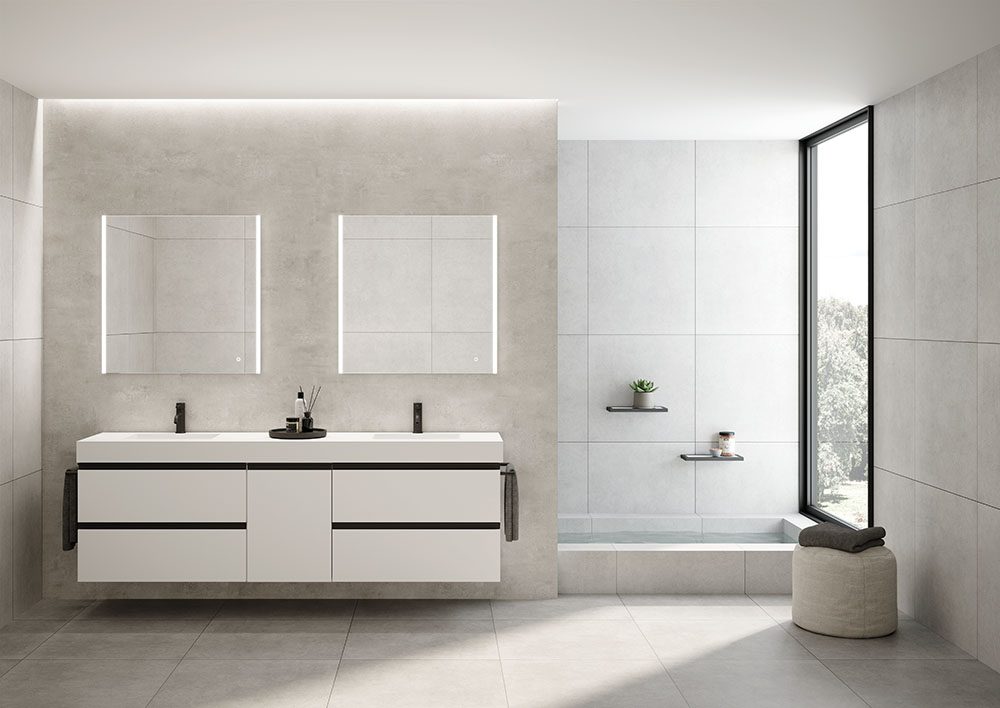
Contemporary support rails come in the same finishes as taps and accessories, in chrome, brushed steel, matt black and brass tones, so they sit within the scheme rather than interrupting it. Some designs double as a shelf or a shower riser, which makes them read as part of the bathroom rather than as an addition.
Ponte Giulio is a good example of how accessible bathroom products have evolved, combining safety and functionality with contemporary finishes and designs that can sit naturally within a modern bathroom.
Choosing a finish that matches the rest of the room is the simplest way to make a safety feature look intentional.
Worth doing before you need it
Most people fit a grab bar after an incident. Fitting one during a planned refit costs a fraction of the disruption and means the wall preparation, the tiling and the finish are all handled together.
If you are renovating a bathroom now, this is the moment to decide where support might one day be useful and prepare those walls.
With specialist accessible bathroom solutions from Ponte Giulio alongside sanitary ware and fittings from brands such as GSI and KWC, the aim does not have to be to create an "accessible-looking" bathroom. It can simply be to create a well-designed bathroom that remains comfortable and practical for more people, for longer.
Our team can advise on the right type, position and fixing for your bathroom, and our accessible collections include rails designed to match contemporary fittings. Visit the showroom to see the finishes in person and to talk through the layout with someone who plans these rooms regularly.
Frequently asked questions
Are grab bars only for elderly people?
No. They help anyone recovering from injury or surgery, anyone pregnant, and anyone who wants something solid to hold on a wet floor. The features that make a bathroom safer generally make it more comfortable for everyone.
Can I use a towel rail as a grab bar?
No. A towel rail is designed to hold a towel and is not fixed to take a person’s weight. A grab bar is engineered and installed as a load bearing fitting, which is precisely the difference that matters in a fall.
Where should grab bars be positioned?
Beside the toilet, at the shower entry, within the shower, and beside the bath. Exact heights and orientations should be based on how the person actually moves rather than on a standard drawing.
What do grab bars need to be fixed into?
A structurally sound substrate with fixings appropriate to the material. Standard plugs in hollow plasterboard are not adequate. Where walls are being built or lined, adding reinforcement in advance is inexpensive and worthwhile.
Do grab bars have to look medical?
Not any more. Contemporary rails come in chrome, brushed steel, matt black and brass finishes that match taps and accessories, and some double as a shelf or shower riser.